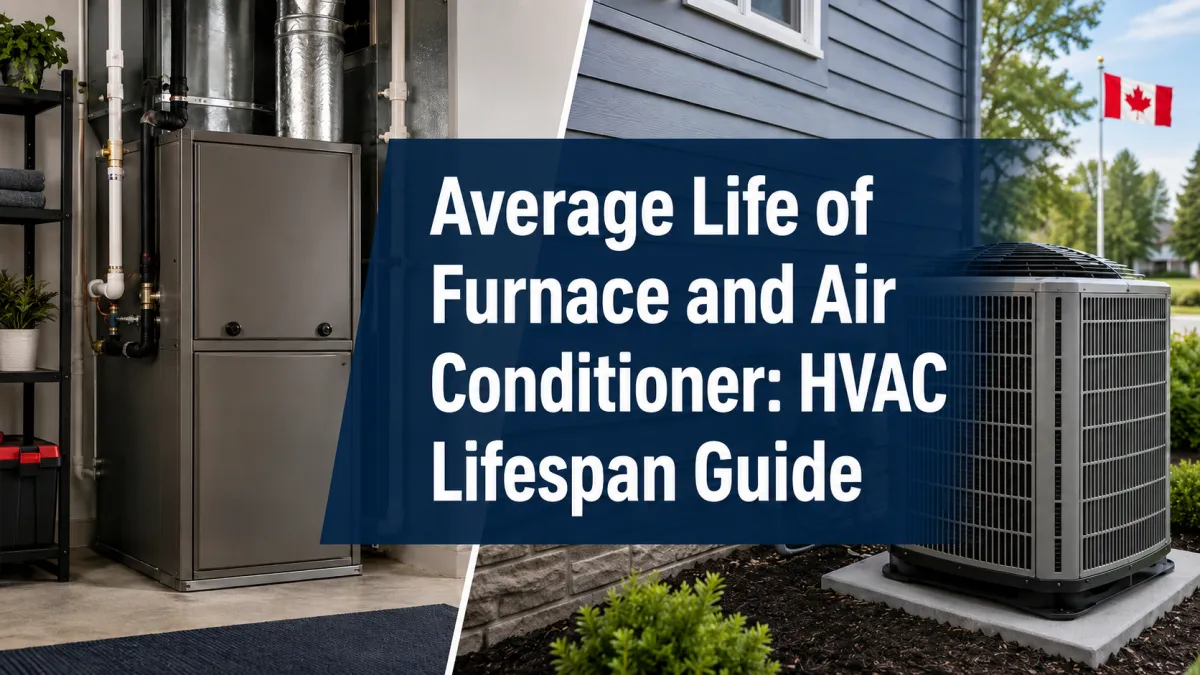
Average Life of Furnace and Air Conditioner
The average life of furnace and air conditioner systems is not always the same.
In most homes, a furnace lasts about 15 to 20 years, while a central air conditioner often lasts about 10 to 17 years.
Some systems can last longer with proper maintenance, while others may wear out sooner because of heavy use, poor installation, skipped air conditioning service, or airflow problems.
For homeowners in Southern Manitoba, HVAC lifespan matters.
Winters can put a lot of demand on a furnace, and summer heat can make a reliable air conditioner just as important.
Knowing how long your heating and cooling equipment should last can help you plan ahead, avoid surprise breakdowns, and make smarter repair or replacement decisions.
Quick Answer: How Long Do Furnaces and Air Conditioners Last?
A furnace usually lasts about 15 to 20 years.
A central air conditioner usually lasts about 10 to 17 years.
Your actual HVAC lifespan depends on maintenance, installation quality, system size, airflow, climate, and repair history.
If your furnace is over 15 years old or your air conditioner is over 10 years old, it does not automatically mean you need a replacement.
But it does mean you should start watching for signs of wear, rising energy bills, uneven comfort, and more frequent repairs.
What Is the Average Life of a Furnace and Air Conditioner?
The average HVAC lifespan depends on the type of system, how often it runs, how well it was installed, and how consistently it has been maintained.
These are averages, not guarantees.
A 12-year-old furnace may still have years of useful life left if it has been maintained well.
On the other hand, a 10-year-old air conditioner may already be struggling if it has had repeated repairs, low airflow, coil issues, or poor installation.
The best way to think about HVAC lifespan is not just age.
Age matters, but so do performance, comfort, repair history, safety, and energy use.
How Long Does a Furnace Last?
Most furnaces last about 15 to 20 years.
Some can last longer, especially if they receive regular maintenance and were sized correctly for the home.
A furnace may reach the end of its useful life sooner if it has been running with dirty filters, blocked airflow, worn parts, poor ductwork, or an oversized or undersized setup.
In Southern Manitoba, a furnace works hard during long heating seasons, so maintenance is not something to ignore.
A furnace over 15 years old does not automatically need to be replaced.
But once it reaches that age, homeowners should start watching for warning signs such as uneven heat, loud operation, higher utility bills, frequent repairs, or trouble keeping the home comfortable.
How Long Does an Air Conditioner Last?
A central air conditioner usually lasts about 10 to 17 years.
Some units may last closer to 15 to 20 years with good maintenance, but many homeowners start dealing with more noticeable AC problems after the 10- to 12-year mark.
Air conditioners often have a shorter lifespan than furnaces because much of the system sits outdoors.
The outdoor condenser is exposed to heat, rain, dirt, grass clippings, leaves, pests, and changing weather.
Over time, coils can get dirty, refrigerant issues can appear, electrical parts can wear down, and the compressor may lose efficiency.
Even if the cooling season is shorter than the heating season, an air conditioner still needs regular care.
A neglected AC unit may run longer, cool less effectively, and use more energy than it should.
Why Furnaces Often Last Longer Than Air Conditioners
Furnaces and air conditioners do different jobs, and they age differently.
A furnace is usually installed indoors and protected from outdoor weather.
It still works hard, especially during cold winters, but it is not exposed to rain, debris, summer heat, or outdoor damage the same way an AC condenser is.
An air conditioner has an outdoor unit that must release heat from the home.
When dirt, leaves, or debris collect around that unit, airflow can drop.
When airflow drops, the system has to work harder.
That added strain can shorten the life of the equipment.
That is why furnace lifespan and air conditioner lifespan should be looked at separately.
They may share ductwork, a thermostat, and the furnace blower, but they are not the same piece of equipment.
What Affects HVAC Lifespan the Most?
No two homes are exactly the same.
The average HVAC lifespan can change depending on several factors.
A system that is maintained regularly, installed properly, and used reasonably will usually last longer than one that is ignored until something breaks.
When Should You Start Planning for Replacement?
You do not need to wait until your furnace or air conditioner completely fails before thinking about replacement.
Planning ahead gives you more time to compare options, understand costs, and avoid rushing into a decision during a no-heat or no-cool emergency.
As a general guideline, homeowners should start planning ahead when:
Planning does not mean replacing right away.
It means knowing the age and condition of your equipment so you are not caught off guard.
Signs Your Furnace Is Near the End of Its Lifespan
A furnace does not always stop working all at once.
Many systems give warning signs before a major failure.
If your furnace is older and showing several of these signs, it may be time to compare the cost of repair with the cost and value of replacement.
Signs Your Air Conditioner Is Near the End of Its Lifespan
An aging air conditioner may still turn on, but that does not always mean it is working well.
If the AC is over 10 years old and repair costs are becoming more frequent, replacement may be worth discussing.
Should You Replace the Furnace and Air Conditioner at the Same Time?
You do not always need to replace the furnace and air conditioner together.
In some homes, one system is much newer than the other, and replacing only the older unit makes more sense.
However, replacing both at the same time can make sense in certain situations.
The right decision depends on the age of each system, the repair history, the condition of the ductwork, and your comfort needs.
HVAC Repair vs Replacement: How to Decide
The hardest part for many homeowners is knowing when to keep repairing a furnace or air conditioner and when to replace it.
How to Extend the Life of Your Furnace and Air Conditioner
You cannot make an HVAC system last forever, but you can help it last longer and run more reliably.
For many homes, filter changes are one of the easiest and most overlooked steps.
A dirty filter can restrict airflow, make the system run longer, increase energy use, and put extra stress on equipment.
How Often Should HVAC Maintenance Be Done?
A good general rule is to schedule furnace maintenance once a year before heating season and air conditioner maintenance once a year before cooling season.
Annual maintenance does not guarantee that a system will never break down, but it can help identify worn parts, airflow problems, safety concerns, and performance issues before they become more expensive.
Is a 20-Year-Old Furnace Still Worth Keeping?
A 20-year-old furnace may still run, but age should not be ignored.
At that point, it is smart to look at the full picture.
Ask yourself whether the furnace is still heating evenly, whether repairs are becoming more frequent, whether energy bills are increasing, and whether it makes unusual noises.
It is also worth considering whether replacement parts are becoming harder to find and whether a winter breakdown would create a serious problem for your home.
If the furnace is still reliable and has been maintained well, repair may still be reasonable.
But if it is becoming unpredictable, replacement may offer better comfort and peace of mind.
Is a 15-Year-Old Air Conditioner Too Old?
A 15-year-old air conditioner is often considered older.
It may still work, but it may not cool as efficiently as it once did.
If your AC is 15 years old and still cools well, does not need frequent repairs, and keeps energy bills reasonable, you may not need to replace it right away.
But if it struggles on hot days, runs constantly, needs service, or leaves parts of the home uncomfortable, it may be time to start planning for replacement.
What Homeowners in Southern Manitoba Should Keep in Mind
In Southern Manitoba, heating reliability is especially important.
A furnace is not just about comfort during the colder months.
It helps protect the home, plumbing, and daily routine during winter weather.
Air conditioning matters too.
Summer heat can make indoor comfort difficult, especially if the AC is older, undersized, or not maintained.
Because both systems play different roles, homeowners should avoid waiting until a breakdown happens.
Planning ahead gives you more time to compare options, understand costs, and make a better decision instead of rushing during a no-heat or no-cool situation.
When to Call Trav’s Plumbing & HVAC
If your furnace or air conditioner is getting older, making unusual noises, struggling to keep up, or needing more frequent repairs, it may be time to have the system inspected.
Trav’s Plumbing & HVAC helps homeowners in Southern Manitoba with heating, cooling, HVAC maintenance, service and repairs as well as replacement planning.
Trav’s serves communities including Winkler, Morden, Plum Coulee, Altona, Reinfeld, and surrounding areas.
A professional inspection can help you understand whether your system still has useful life left or whether replacement should be considered.
You do not need to guess based on age alone.
The condition of the equipment, repair history, airflow, comfort level, and safety of the system all matter.
Final Thoughts on HVAC Lifespan
The average life of a furnace and air conditioner gives homeowners a helpful starting point.
A furnace often lasts about 15 to 20 years, while a central air conditioner often lasts about 10 to 17 years.
But the real answer depends on maintenance, installation, usage, climate, airflow, and repair history.
If your HVAC system is still working well, regular maintenance can help protect it.
If it is older, unreliable, or becoming expensive to repair, it may be time to compare repair and replacement options.
The best decision is not always the cheapest short-term fix.
It is the option that helps keep your home comfortable, safe, and reliable through Southern Manitoba’s heating and cooling seasons.
FAQs: Average Life of Furnace and Air Conditioner
What is the average life of a furnace and air conditioner?
The average furnace lasts about 15 to 20 years, while the average central air conditioner lasts about 10 to 17 years. Some systems last longer with proper maintenance, but age, usage, installation quality, and repair history all affect HVAC lifespan.
How long does a furnace last?
A furnace usually lasts around 15 to 20 years. A well-maintained furnace may last longer, while one with poor airflow, skipped maintenance, or repeated repairs may wear out sooner.
How long does an air conditioner last?
A central air conditioner often lasts about 10 to 17 years. Outdoor exposure, dirty coils, refrigerant issues, and lack of maintenance can shorten its lifespan.
Can an HVAC system last 30 years?
Some HVAC equipment can last 30 years, but that is not typical for most modern furnace and air conditioner systems. Even if older equipment still runs, it may be less efficient, less reliable, and more expensive to repair.
Should I replace my furnace and AC at the same time?
You may want to replace both at the same time if they are both old, inefficient, or frequently breaking down. If one system is much newer and working well, replacing only the older unit may make more sense.
What shortens HVAC lifespan?
Poor maintenance, dirty filters, blocked vents, poor installation, incorrect system sizing, airflow problems, and heavy use can all shorten HVAC lifespan.
How often should I service my furnace and air conditioner?
Most homeowners should have their furnace serviced once a year before winter and their air conditioner serviced once a year before summer. Regular maintenance helps improve reliability and may help extend system life.
When should I stop repairing my furnace or air conditioner?
It may be time to stop repairing your furnace or air conditioner if the system is near the end of its average lifespan, repairs are becoming frequent, energy bills are rising, or your home is no longer comfortable.
