
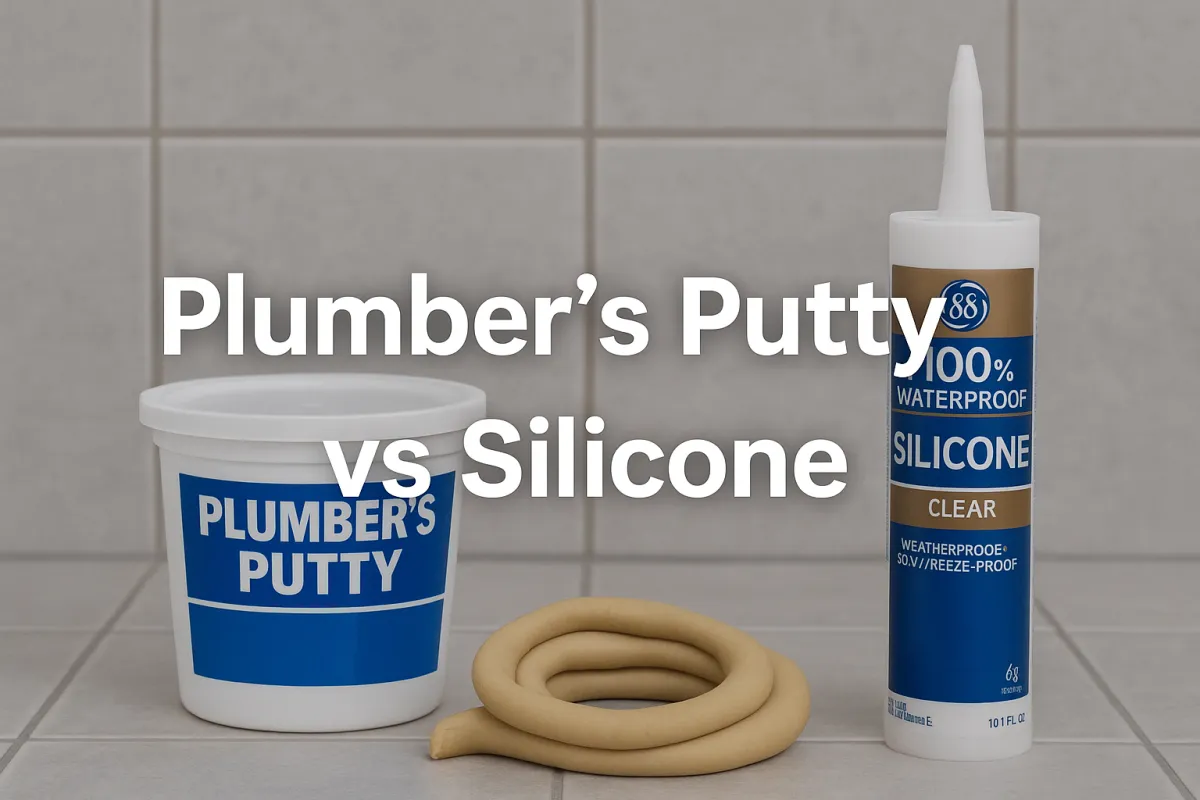
Plumber’s Putty vs Silicone: What’s the Difference & When to Use Each | Trav's Plumbing & HVAC
If you’re installing a sink, drain, or faucet, you’ve probably run into this question: plumber’s putty vs silicone — which one should I use?
And more importantly, what happens if you use the wrong one?
Plumber’s putty is water-resistant and best for sealing sink strainers and faucet bases where future removal may be needed. Silicone is fully waterproof and better for plastic drains, stone surfaces, and areas exposed to constant moisture
Using the wrong one can lead to slow leaks, damage to fixtures, or having to redo the job entirely.
Let’s break it down clearly so you know exactly when to use plumber’s putty, when silicone is the better choice, and how to avoid common mistakes.
What Is Plumber’s Putty?
Plumber’s putty is a soft, moldable sealing compound that has been used for decades.
It never fully hardens, which makes it easy to adjust or remove later if repairs are needed.
Plumbers commonly use it to:
Seal sink strainers
Seal pop-up drain assemblies
Create a watertight seal under faucet bases
It’s designed to sit between two non-pressurized surfaces.
It’s not meant to be used inside pipes or anywhere water is under pressure.
That flexibility is exactly why plumber’s putty is still widely used today.
What Is Silicone Sealant?
Silicone sealant (often called silicone caulk) is a liquid adhesive that cures into a rubber-like, waterproof seal.
Once it sets, it creates a strong bond that doesn’t easily break down.
Silicone is typically used for:
Plastic drain components
Undermount sinks
Areas exposed to constant moisture
Fixtures where plumber’s putty isn’t compatible
Unlike plumber’s putty, silicone actually bonds to surfaces.
That makes it extremely effective — but also harder to remove if something needs to be repaired later.
Plumber’s Putty vs Silicone: Key Differences (Silicone vs Plumbers Putty Explained)
Here’s a clear side-by-side comparison to make the differences easy to understand:
Is Plumber’s Putty Waterproof?
No.
Plumber’s putty is not waterproof.
It is water-resistant.
That means it works well in areas where water passes through occasionally, such as a sink drain.
But it will fail in areas that stay wet all the time or experience constant moisture or movement.
Silicone, on the other hand, is fully waterproof once cured, which is why it’s often required for plastic components and modern fixtures.
When to Use Plumber’s Putty
Plumber’s putty is usually the right choice when:
The fixture may need to be removed later
The surfaces are metal or porcelain
The area isn’t exposed to constant moisture
Common uses include:
Sink strainers
Basket drains
Faucet bases
Pop-up drain flanges
Because it stays flexible, it allows for easier future maintenance.
When NOT to Use Plumber’s Putty
This is where many DIY installations go wrong.
Plumber’s putty should not be used on:
Plastic drain components (unless labeled safe)
Granite, marble, or natural stone
Acrylic or ABS fittings
In modern sinks and bathrooms, plastic components are very common.
In those cases, silicone is often the safer option.
When to Use Silicone Instead
Silicone sealant is the better choice when:
You’re working with plastic drain assemblies
The area stays wet or damp most of the time
You need a long-term, permanent seal
The manufacturer recommends silicone
Silicone is commonly used for:
Plastic overflow gaskets
Sealing fixtures to tile or stone countertops
Just keep in mind that once silicone cures, removal can be time-consuming.
Silicone vs Plumber’s Putty for Sink Drains: Which Is Better?
There isn’t one universal answer — it depends on the materials.
Metal drain with a porcelain sink → plumber’s putty usually works best
Plastic drain components → silicone is the safer option
Stone or granite countertops → silicone only
Many leaks happen because plumber’s putty was used where silicone was required, or vice versa.
Common Mistakes We See (And How to Avoid Them)
Some of the most common issues include:
Using plumber’s putty on plastic drains
Using silicone where future removal is required
Over-tightening fixtures and squeezing out the seal
Mixing silicone and putty in the same joint
If you’re ever unsure, checking the manufacturer’s instructions or contacting the experts can prevent costly mistakes.
Can You Use Silicone Instead of Plumber’s Putty?
Sometimes, yes — but not always.
Silicone can replace plumber’s putty in many modern applications, especially with plastic and stone materials.
However, plumber’s putty is still preferred for certain sink strainers and metal fixtures because it allows for easier adjustment and removal.
It’s not about which product is better overall. It’s about using the right one for the job.
When to Call a Professional Plumber in Southern Manitoba
If you’re dealing with:
A leak that won’t stop
A drain that keeps loosening
Water damage under a sink
Older plumbing systems
…it’s often best to have a professional plumber take a look before the problem gets worse.
Trav’s Plumbing & HVAC LTD helps homeowners throughout Southern Manitoba diagnose leaks properly and fix them the right way the first time.
Final Takeaway
When choosing between plumber’s putty vs silicone, remember:
Plumber’s putty is flexible and removable, but not waterproof
Silicone is fully waterproof and long-lasting, but permanent
The right choice depends on the materials and moisture exposure
If you’re unsure, using the wrong product can lead to leaks and costly repairs.
And when in doubt, a professional plumber can save you time and frustration.
FAQs
Can plumber’s putty stop a leak permanently?
Plumber’s putty can stop leaks in the right application, but it isn’t considered a permanent waterproof seal. It works best where water exposure is occasional and future removal may be needed.
Can you use silicone instead of plumber’s putty?
In many cases, yes. Silicone is often used instead of plumber’s putty for plastic drains, stone countertops, and constant moisture areas. Just keep in mind that silicone creates a permanent bond.
Does plumber’s putty dry or harden over time?
No. Plumber’s putty stays soft and flexible, which makes it easier to remove but less suitable for constantly wet areas.
How long does silicone take to cure?
Most silicone sealants skin over within about 30 minutes, but full curing usually takes 24 hours. The area should stay dry during that time.
Which is better for sink drains: silicone or plumber’s putty?
It depends on the drain material. Metal drains often work best with plumber’s putty, while plastic drain assemblies usually require silicone.
