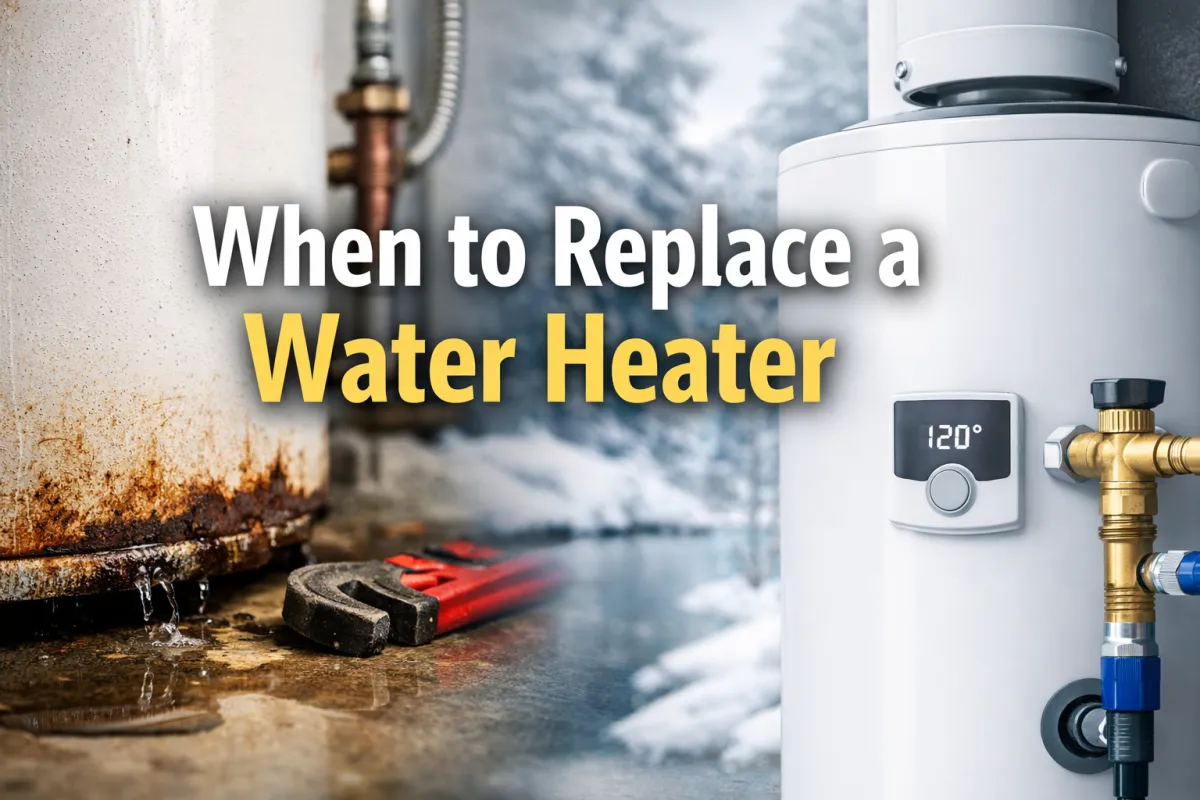
When to Replace a Water Heater | Trav's Plumbing & Heating LTD.
Most homeowners don’t think about their water heater until something goes wrong.
One day the shower goes cold, the water looks rusty, or there’s a puddle forming underneath the tank.
And suddenly the big question pops up:
When should you replace a water heater?
Quick Takeaway
If you’re asking when to replace a water heater, here’s the bottom line:
Most water heaters need replacement every 8–12 years
Warning signs usually appear before full failure
Manitoba’s climate can shorten lifespan
Replacing early can prevent costly emergencies
If your water heater is aging or showing signs of trouble, it’s usually better to deal with it on your terms — not when it stops working altogether.
When Should a Water Heater Be Replaced?
Most water heaters should be replaced after 8 to 12 years, depending on the type of unit, water quality, and how hard it’s been working over time.
If your water heater is over 10 years old and showing signs like leaks, rust, or inconsistent hot water, replacement is usually the safer and more cost-effective option.
That quick answer matters — but the details below help you decide whether now is the right time or if you still have some runway left.
How Often Should You Replace Your Water Heater?
If you’re wondering how often to replace a water heater, the answer depends largely on what kind of system you have and the conditions it operates in.
Average Water Heater Lifespan by Type
Most homeowners can expect replacement roughly once every decade for traditional tank systems.
In Southern Manitoba, many water heaters land on the shorter end of these ranges due to cold incoming water, mineral buildup, and heavier winter demand.
Signs It’s Time to Replace Your Water Heater
Sometimes the timing is obvious.
Other times, the warning signs creep up slowly.
Your Water Heater Is Over 10 Years Old
Age is the single biggest predictor of failure.
Even if a unit still produces hot water, internal components may already be breaking down.
If your water heater is past the 10-year mark, replacement is often smarter than waiting for a sudden failure.
You can usually find the manufacture date on the label near the top of the tank.
You’re Running Out of Hot Water Faster Than Before
If hot water doesn’t last as long as it used to, sediment buildup may be reducing the tank’s effective capacity.
This is common in areas with harder water.
Once flushing no longer helps, replacement is usually the better long-term solution.
Rusty or Discoloured Hot Water
Brown, reddish, or cloudy hot water is a sign that corrosion may be happening inside the tank.
Once rust starts forming internally, the tank’s structural integrity is compromised.
At that point, replacement is usually only a matter of time.
Leaks Around the Base of the Tank
Moisture or pooling water near the bottom of the unit is a serious warning sign.
Even small leaks can quickly turn into major water damage.
A leaking tank almost always means replacement, not repair.
Strange Noises Coming From the Tank
Banging, popping, or rumbling noises usually come from hardened sediment inside the tank.
Over time, this sediment overheats the metal and accelerates wear.
Persistent noise often means the tank is nearing the end of its lifespan.
Repairs Are Becoming More Frequent
If your water heater needs repeated repairs — especially on an older unit — replacement often costs less over time than continuing to fix it.
A simple rule of thumb:
Under 6 years old: repair may make sense
Over 10 years old: replacement is usually the better investment
Repair vs. Replace: How Do You Decide?
One of the most common questions homeowners ask is whether to fix their water heater or replace it.
In general:
If the unit is older and failing, replacement usually makes more sense
If the unit is newer and the issue is minor, repair may be reasonable
Replacing a water heater before it fails can help you avoid:
Sudden loss of hot water
Water damage from tank rupture
Emergency replacement during winter
Higher last-minute costs
And in Manitoba winters, unexpected failures are more than just inconvenient — they can cause real damage.
Does Manitoba’s Climate Affect Water Heater Lifespan?
Yes, and this is something many national articles overlook.
In Southern Manitoba:
Incoming water temperatures are colder
Water heaters work harder year-round
Sediment buildup is more common
Winter demand puts extra strain on tanks
All of this can shorten the lifespan of a traditional tank water heater, which is why many local homeowners replace theirs closer to 8–10 years rather than stretching it longer.
Can a Water Heater Last 20 Years?
In some cases, yes — but usually only with tankless systems or exceptionally well-maintained units.
Traditional tank water heaters rarely last 20 years.
Even if they still function, efficiency drops and the risk of leaks increases significantly over time.
Is It Better to Replace a Water Heater Before It Fails?
For most homeowners, yes.
Replacing a water heater before it fails gives you:
Time to choose the right system
Predictable costs
No emergency service calls
Lower risk of water damage
Waiting until failure often means replacing it under pressure — sometimes during the coldest part of the year.
When to Call a Professional
If you’re unsure how old your water heater is or whether it’s still safe to keep running, a professional inspection can help you avoid surprises.
At Trav’s Plumbing & HVAC LTD, we help homeowners across Southern Manitoba assess the condition of their water heaters, explain what they’re seeing, and walk through replacement options when the time is right.
Sometimes replacement is urgent.
Other times, you still have time.
Knowing which situation you’re in makes the decision much easier.
FAQS
How often should a water heater be replaced?
Most water heaters should be replaced every 8–12 years, depending on the type, water quality, and usage.
Is it worth replacing a water heater before it fails?
Yes. Replacing a water heater early can help prevent water damage, emergency costs, and unexpected loss of hot water.
Can a water heater last longer than 15 years?
Tankless systems often last 15–20 years or more. Traditional tank water heaters rarely last that long without increased risk.
What happens if you don’t replace an old water heater?
Older water heaters are more likely to leak, fail suddenly, and operate inefficiently, which can increase both repair costs and utility bills.
How do I know if my water heater needs replacing or just repairing?
Age, frequency of repairs, visible leaks, rust, and declining performance are key factors. A professional inspection can help clarify the best option.
