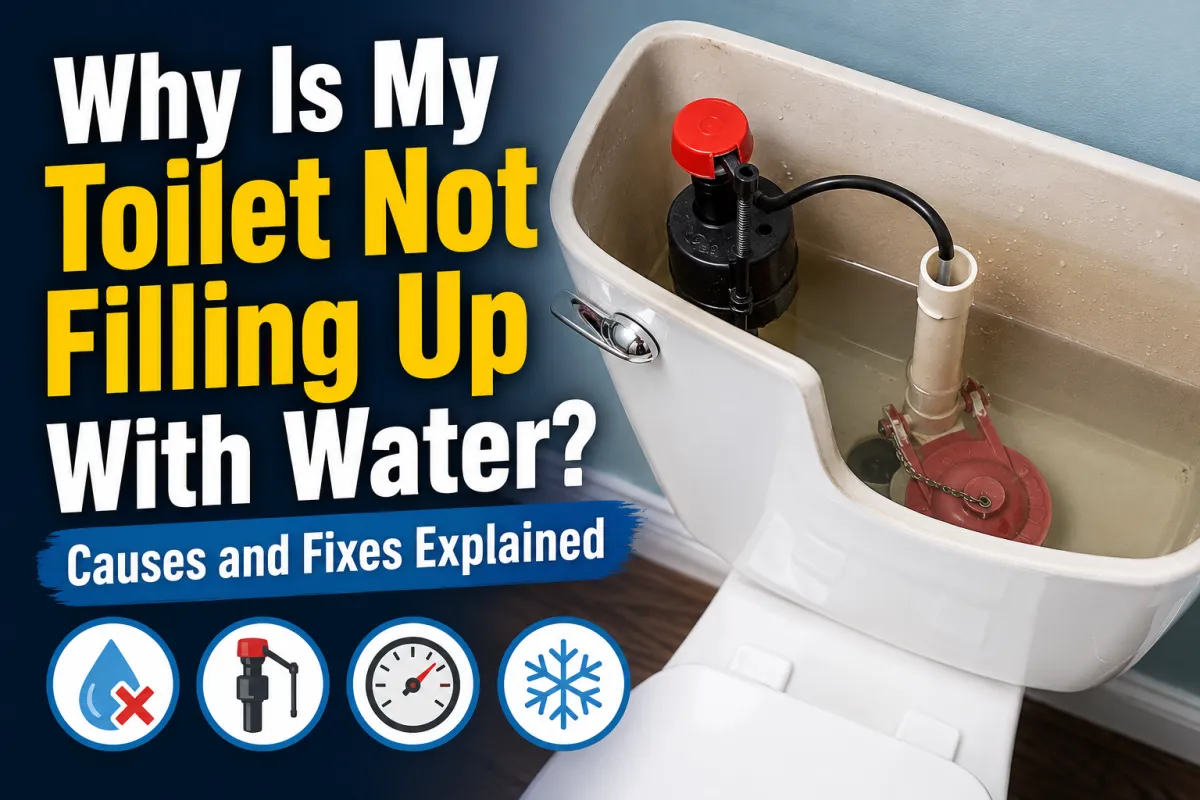
Why Is My Toilet Not Filling Up With Water?
If you've flushed your toilet only to find that the tank isn't refilling, you're not alone.
A toilet not filling up with water is one of the most common plumbing problems homeowners face.
Sometimes the issue is a quick fix, such as a closed water supply valve.
In other cases, the problem may involve a faulty fill valve, low water pressure, clogged components, or even frozen pipes.
The good news is that many causes can be identified with a simple inspection.
This guide explains why your toilet won't fill with water, how to troubleshoot the problem, and when it's time to call a plumber for service.
Quick Answer
If your toilet is not filling up with water, the most common causes include a closed shut-off valve, a faulty fill valve, a stuck float, a clogged supply line, low water pressure, worn toilet components, or frozen pipes.
In many cases, the issue can be diagnosed by inspecting the tank and checking for proper water flow after a flush.
How Does a Toilet Tank Fill With Water?
Every time you flush your toilet, water leaves the tank and flows into the bowl.
As the water level drops, the fill valve opens and allows fresh water to enter the tank.
A float rises as the tank fills.
Once the water reaches the correct level, the float signals the fill valve to shut off.
If any part of this system fails, the toilet tank may not fill at all, may fill very slowly, or may stop refilling after a flush.
The main components involved include:
Fill valve
Float
Supply line
Overflow tube
Shut-off valve
Understanding how these parts work together makes troubleshooting much easier.
Why Is My Toilet Not Filling Up With Water?
Several issues can prevent water from entering your toilet tank.
1. The Water Supply Valve Is Closed
Before assuming a toilet part has failed, check the shut-off valve behind the toilet.
This valve controls the flow of water to the toilet.
If it was accidentally turned off during cleaning, maintenance, or previous repairs, the tank may not fill.
Turn the valve counterclockwise until it is fully open and flush the toilet again.
2. The Fill Valve Has Failed
A bad fill valve is one of the most common reasons a toilet tank won't fill with water.
The fill valve controls the flow of water into the tank after every flush.
Over time, internal seals and moving parts wear out and stop functioning properly.
Common signs of a faulty fill valve include:
No water entering the tank
Slow tank refill
Hissing sounds
Intermittent filling
Inconsistent water levels
Fortunately, fill valve replacement is often a relatively straightforward repair.
3. The Float Is Stuck
The float tells the fill valve when to stop filling the tank.
If the float gets stuck in the raised position, the fill valve may incorrectly think the tank is already full.
Remove the tank lid and inspect the float.
If it appears stuck, gently move it up and down to see if it begins operating normally again.
4. The Fill Valve Is Clogged
Mineral buildup and debris can restrict water flow through the fill valve.
This is especially common in areas with hard water.
If the fill valve becomes partially blocked, your toilet tank may fill very slowly or not fill completely.
Cleaning the valve may solve the issue, but older valves often need replacement.
5. The Water Supply Line Is Blocked or Damaged
The supply line connects your home's plumbing system to the toilet.
If the line becomes kinked, clogged, corroded, or damaged, water may not be able to reach the tank properly.
Inspect the supply line for:
Leaks
Kinks
Corrosion
Visible damage
Replacing a damaged supply line is often a simple and inexpensive repair.
6. Low Water Pressure
Your toilet relies on adequate water pressure to refill properly.
If multiple fixtures throughout your home have weak water flow, low pressure may be contributing to the problem.
Potential causes include:
Municipal water supply issues
A partially closed main water valve
Pressure regulator problems
Pipe blockages
Hidden plumbing leaks
If faucets, showers, and toilets are all affected, a broader plumbing issue may be present.
7. Frozen Pipes
During Southern Manitoba winters, frozen pipes can prevent water from reaching your toilet.
A frozen water line may completely block water flow and cause the toilet tank to remain empty after flushing.
Signs of frozen pipes may include:
No water entering the toilet tank
Reduced water flow elsewhere in the home
Frost visible on exposed plumbing
Unusually cold pipe surfaces
Frozen pipes should be addressed quickly since they can eventually burst and cause significant water damage.
8. Worn-Out Toilet Components
Toilets contain several moving parts that wear out over time.
Older toilets may experience issues with:
Fill valves
Floats
Flappers
Seals
Overflow tubes
If your toilet repeatedly experiences filling problems, replacing worn components may provide a long-term solution.
Why Is My Toilet Tank Empty After Flushing?
If your toilet tank empties after a flush but never refills, the problem is usually related to water not entering the tank.
The most common causes include:
A closed shut-off valve
A failed fill valve
A stuck float
A clogged water supply line
Frozen plumbing
Low water pressure
If the tank remains completely empty after flushing, start by checking whether water is reaching the fill valve at all.
Why Is My Toilet Tank Filling Slowly?
Sometimes the toilet eventually fills but takes much longer than normal.
A toilet tank filling slowly is often caused by:
Mineral buildup inside the fill valve
A partially closed shut-off valve
A clogged supply line
Low water pressure
An aging fill valve
If your tank takes several minutes to refill, inspecting these components can help identify the cause.
How to Troubleshoot a Toilet Tank That Won't Fill
If your toilet tank is not filling, follow these troubleshooting steps.
Step 1: Check the Shut-Off Valve
Verify that the water supply valve behind the toilet is fully open.
Step 2: Remove the Tank Lid
Inspect the components inside the tank.
Look for obvious signs of damage, corrosion, or disconnected parts.
Step 3: Check the Float
Ensure the float moves freely and is not stuck in the raised position.
Step 4: Flush the Toilet
Watch what happens inside the tank after flushing.
If no water enters, the fill valve or water supply may be the problem.
Step 5: Inspect the Supply Line
Look for kinks, leaks, corrosion, or damage that could restrict water flow.
Step 6: Check Water Pressure
Test nearby faucets and fixtures.
If they also have weak flow, low water pressure may be affecting the toilet.
Step 7: Look for Signs of Frozen Plumbing
During winter, inspect exposed pipes for frost or freezing.
Step 8: Call a Plumber If Needed
If you've completed these steps and the toilet still won't refill, professional diagnosis may be necessary.
Can You Fix a Toilet That Is Not Filling Up With Water Yourself?
Many toilet filling issues can be fixed without professional assistance.
If you're uncomfortable working with plumbing fixtures or cannot identify the problem, calling a professional like Trav's Plumbing & HVAC can save time and prevent accidental damage.
When Should You Call a Plumber?
While some toilet issues are easy to fix, others require professional attention.
You should consider calling a plumber if:
The toilet still won't fill after troubleshooting
The problem keeps returning
Multiple fixtures have low water pressure
You suspect frozen pipes
There are visible leaks
The supply line is damaged
Internal toilet components need replacement
You are unsure of the cause
Prompt service and repairs can help prevent larger plumbing problems and restore normal operation more quickly.
How Trav's Plumbing & HVAC Can Help
When your toilet tank won't fill with water and basic troubleshooting isn't solving the problem, professional assistance can make the process much easier.
At Trav's Plumbing & HVAC, we help homeowners throughout Southern Manitoba diagnose and repair toilet problems, water supply issues, frozen pipes, and other plumbing concerns.
Our experienced team can identify the source of the issue and recommend the most effective solution.
Whether your toilet is not filling up with water at all or simply takes too long to refill, we can help restore your plumbing system to proper working order.
How to Prevent Toilet Filling Problems
A few simple maintenance steps can help reduce the risk of future toilet problems.
To keep your toilet operating properly:
Inspect toilet components annually
Replace aging fill valves before they fail
Address mineral buildup when it appears
Check supply lines for wear or corrosion
Protect plumbing during freezing temperatures
Schedule plumbing inspections when necessary
Preventative maintenance can help extend the life of your toilet and reduce unexpected repairs.
Final Thoughts: Why Is My Toilet Not Filling Up With Water
If you're wondering, "Why is my toilet not filling up with water?" the answer often comes down to a handful of common issues.
A closed water supply valve, faulty fill valve, stuck float, clogged supply line, low water pressure, frozen pipe, or worn-out toilet component can all prevent a toilet tank from refilling properly.
By following a systematic troubleshooting process, you can often identify the cause and determine whether it's a simple DIY repair or a problem that requires professional help.
Servicing the issue early can prevent further plumbing problems and get your toilet working properly again.
FAQs: Why Is My Toilet Not Filling Up With Water
How do you fix a toilet that won't fill with water?
To fix a toilet that won't fill with water, start by checking that the shut-off valve behind the toilet is fully open. Next, inspect the float and fill valve inside the tank for signs of damage, clogs, or improper positioning. If the fill valve is worn out or clogged with mineral deposits, cleaning or replacing it may restore normal operation.
What is the problem if the water tank is not filling?
If a toilet tank is not filling, the problem is usually related to the water supply or one of the tank's internal components. Common causes include a closed water supply valve, a faulty fill valve, a stuck float, low water pressure, a clogged supply line, or frozen pipes during cold weather.
Is it normal for a toilet to take 2 minutes to fill?
Most toilets refill within 30 seconds to 90 seconds after flushing. If your toilet takes two minutes or longer to fill, it may indicate a partially clogged fill valve, mineral buildup, low water pressure, or a restriction in the supply line that should be inspected.
What causes a toilet tank to stop filling?
A toilet tank can stop filling because of a failed fill valve, a stuck float, a blocked water supply line, low water pressure, a closed shut-off valve, or frozen plumbing. Identifying which component is preventing water from entering the tank is the key to resolving the issue.
How to unclog a toilet fill valve?
To unclog a toilet fill valve, turn off the water supply and remove the valve cap according to the manufacturer's instructions. Flush out debris and mineral deposits with clean water before reassembling the valve. If cleaning does not improve performance, replacing the fill valve is often the best solution.
How do you know if your water tank is broken?
Signs that a toilet tank may have a damaged component include frequent leaks, cracks in the porcelain, constant running water, slow filling, inconsistent water levels, or a tank that does not refill after flushing. A professional inspection can determine whether a repair or replacement is the better option.
