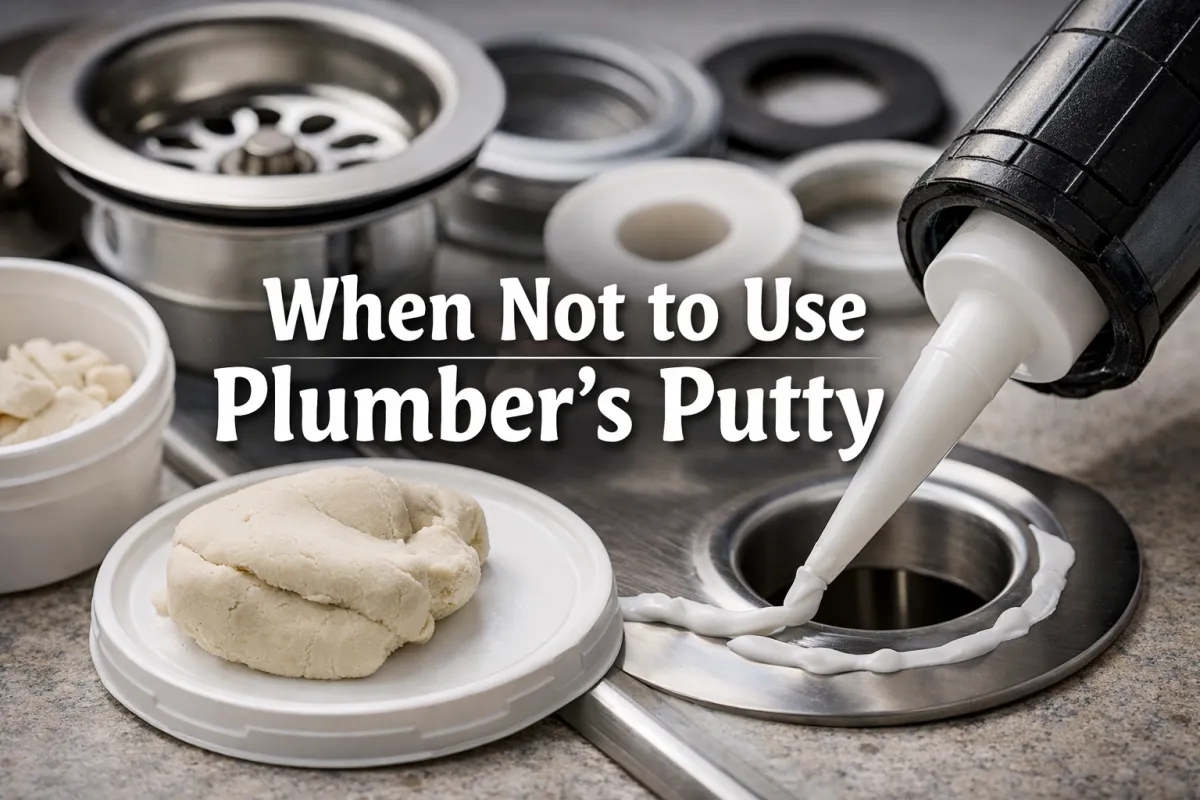
When Not to Use Plumber’s Putty (And What to Use Instead)
If you’re wondering when not to use plumber’s putty, you’re not alone.
It’s one of the most misunderstood plumbing materials out there.
Plumber’s putty works great in the right situation—but use it in the wrong place, and you can end up with leaks, stains, or damaged fixtures weeks later.
And that’s where most DIY guides fall short.
They tell you how to use plumber’s putty, but not where you absolutely shouldn’t use it.
This guide fixes that.
Quick Answer: When Should You Not Use Plumber’s Putty?
You should not use plumber’s putty on plastic, acrylic, granite, marble, or other porous stone surfaces.
It can soften plastics, stain stone, and even void manufacturer warranties.
In those situations, silicone sealant or a rubber gasket is the safer and longer-lasting option.
Now let’s break down exactly why those situations matter.
What Plumber’s Putty Is (And Why It Can Be a Problem)
Plumber’s putty is a soft, oil-based sealing compound.
It never fully hardens, which makes it useful for sealing metal sink drains and fixtures that might need adjustment later.
But that same oil-based formula is also the reason plumber’s putty doesn’t work everywhere.
Oils and certain materials don’t mix—and that’s where things start to go wrong.
Where You Should Never Use Plumber’s Putty
1. On Plastic or PVC Parts
This is one of the most common mistakes homeowners make.
Plumber’s putty can soften plastic over time, especially PVC and ABS.
That softening can cause drains or fittings to warp slightly, breaking the seal and leading to slow leaks that don’t show up right away.
Avoid plumber’s putty on:
Plastic sink drains
PVC or ABS fittings
Plastic strainers
What to use instead:
A 100% silicone sealant or the rubber gasket that came with the fixture.
2. On Acrylic Sinks or Tubs
Acrylic fixtures look durable, but they’re surprisingly sensitive to oil-based products.
Plumber’s putty can:
Cause discoloration
Leave dull or greasy marks
Weaken the acrylic surface over time
Once that damage happens, it’s usually permanent.
What to use instead:
Silicone sealant rated for acrylic or fiberglass surfaces.
3. On Granite, Marble, or Natural Stone
This is where plumber’s putty can get expensive—fast.
The oils in plumber’s putty can seep into natural stone and cause dark stains that don’t wash out.
Even if the putty is hidden under a drain flange, the stone can still absorb the oils.
Never use plumber’s putty on:
Granite sinks or countertops
Marble surfaces
Quartz or other porous stone
What to use instead:
A non-staining silicone sealant approved for stone.
4. When the Manufacturer Says Not to Use It
Many modern sink drains and fixtures specifically state “do not use plumber’s putty” in the installation instructions.
Ignoring that warning can:
Void the manufacturer’s warranty
Cause sealing failures
Lead to problems during inspections or resale
If the instructions call for silicone or a gasket only, that’s not a suggestion—it’s a requirement.
5. On Pressurized Plumbing Connections
Plumber’s putty is not designed to handle pressure.
You should never use it on:
Threaded pipe connections
Water supply lines
Compression fittings
It won’t seal properly and can fail suddenly.
What to use instead:
Thread seal tape or pipe joint compound made for pressurized fittings.
6. Anywhere Exposed to Heat
Plumber’s putty doesn’t handle heat well. Near hot water lines or heating components, it can dry out, shrink, or lose its seal.
In climates like Southern Manitoba—where temperature swings are common—this can cause seals to fail faster than expected.
What to use instead:
Heat-resistant silicone sealant.
Plumber’s Putty vs Silicone: Which One Should You Use?
If you’re deciding between plumber’s putty and silicone, here’s the simplest way to look at it.
Plumber’s putty is still useful—but only in the right applications.
Common DIY Mistakes We See
And these come straight from real service calls.
Using plumber’s putty on plastic drains because “it’s what people always use”
Ignoring the gasket included with the fixture
Using plumber’s putty and silicone together (this almost always fails)
Trying to seal a pressurized leak with putty
Most of these mistakes don’t cause immediate problems.
They cause slow leaks that show up after cabinets are damaged or flooring starts to swell.
What to Use Instead of Plumber’s Putty
If plumber’s putty isn’t the right choice, the correct alternative is usually one of these:
100% silicone sealant (kitchen and bath rated)
Non-staining silicone for stone surfaces
Rubber or foam gaskets included with fixtures
Thread seal tape or pipe dope for threaded connections
Choosing the right material once is far cheaper than repairing water damage later.
When It’s Better to Call a Plumber
If you’re working with:
Granite or marble countertops
Mixed materials (metal, plastic, and stone together)
Older plumbing systems common in Manitoba homes
A leak you can’t see but suspect
…it’s usually worth getting a professional involved before sealing everything up.
At Trav’s Plumbing & HVAC LTD, we help homeowners across Southern Manitoba avoid exactly these kinds of problems—especially the ones that don’t show up until weeks later.
Give us a call or send us a message and we can help you out
Bottom Line
Plumber’s putty isn’t outdated—but it’s not universal either.
Using it in the wrong place can lead to leaks, stains, and expensive repairs.
If you’re ever unsure, stop before sealing anything.
Or get a professional opinion so it’s done right the first time.
And if you need help, Trav’s Plumbing & HVAC LTD is always here to make sure your plumbing holds up long after the job is finished.
FAQs About When Not to Use Plumber’s Putty
Can plumber’s putty damage a sink?
Yes. It can stain natural stone and soften plastic or acrylic sinks over time.
Is plumber’s putty safe for plastic drains?
No. Silicone sealant is a better and safer option for plastic or PVC components.
Why do some sink drains say not to use plumber’s putty?
Because it can interfere with built-in gaskets or damage certain materials, which may void the warranty.
Does plumber’s putty ever harden?
No. It stays soft, which is why it shouldn’t be used in pressurized or high-heat areas.
Should I use silicone instead of plumber’s putty?
If you’re working with plastic, acrylic, stone, or the manufacturer recommends it, silicone is the better choice.
