Why Is My HVAC So Loud?
A loud HVAC system is usually a sign that something loose, worn, or dirty needs attention before it turns into a bigger repair.
Banging, squealing, and rattling each point to a different cause, and knowing which one you're hearing helps you decide whether to check it yourself or call a technician.
This guide walks Southern Manitoba homeowners through the most common causes and what to do next.
A humming furnace or a quietly running air conditioner is easy to ignore.
But when your HVAC system suddenly gets loud, it's hard to think about anything else.
If you're searching for why your HVAC is so loud, you're probably standing next to a unit that sounds different than it did last week, and you want to know if that's a real problem or just normal wear.
Homeowners across Winkler, Morden, and the wider Pembina Valley ask us this exact question every year, and the noise itself usually points straight to the cause.
Why Is My HVAC So Loud All of a Sudden?
A sudden increase in HVAC noise almost always means one specific part has come loose, worn out, or broken, not that the whole system is failing.
Common triggers include a loose panel, a worn blower motor, a slipping belt, or a dirty filter forcing the fan to work harder than it should.
Furnaces and air conditioners are built to run quietly for years.
When a system that used to hum along suddenly clanks, squeals, or rattles, something inside has physically shifted or worn down.
New noise is a clue, not a mystery.
Each type of sound points toward a different part of the system, which is why the noises below are grouped by what they actually sound like.
What Does a Normal HVAC Sound Like?
A healthy HVAC system produces a steady, low hum, generally in the 50 to 60 decibel range from the outdoor unit, similar to a normal conversation or light rainfall.
Anything sharper, louder, or irregular is worth paying attention to.
That baseline hum comes from the compressor and fan working together, and it should stay fairly steady from the moment the system starts until it shuts off.
A sudden clank, a rising squeal, or a noise that changes pitch while the system runs is different from that background hum.
It usually means a part needs attention rather than just more time to warm up.
Common HVAC Noises and What They Mean
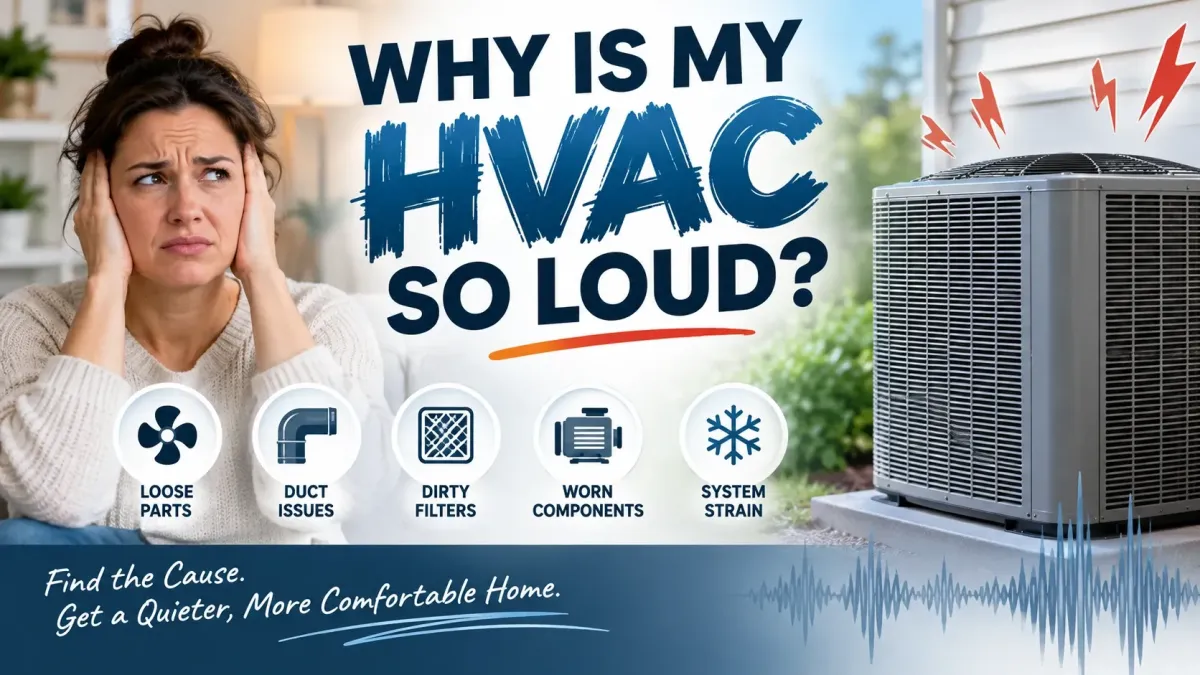
Most HVAC noise complaints fall into one of five categories.
Here's what each one usually means and what tends to cause it.
Banging or Clanging
A loud bang or metallic clang, especially right when the system starts or stops, often means a part has broken loose inside the unit.
A bent blower blade, a broken connecting rod, or loose ductwork are the usual suspects.
This is one of the few HVAC noises that calls for shutting the system off until a technician can look at it, since a loose part spinning inside a blower can cause real damage in a short amount of time.
Squealing or Screeching
A high pitched squeal is almost always a belt or motor bearing problem.
Belts stretch and wear over years of use, and a worn bearing loses its lubrication and starts grinding metal against metal.
Neither one gets better on its own, and both are inexpensive to fix while they're still just noisy instead of seized.
Rattling or Vibrating
Rattling and vibrating noises usually trace back to loose screws, panels, or an outdoor unit that has settled unevenly on its pad.
Wind, ground shifting, and years of vibration can all work a fastener loose over time.
A blower wheel that has come out of balance can cause the same rattling sound while also throwing off airflow, leaving you with a system that's both noisy and struggling to keep your home cool.
Once the underlying issue is fixed, options like vibration isolation pads and compressor sound blankets can trim several decibels off outdoor unit noise.
Buzzing or Humming
A buzzing sound often points to a loose electrical connection, a failing capacitor, or debris caught in the outdoor fan.
A hum that continues even when the system isn't actively heating or cooling can mean the compressor is trying to start and struggling, which sometimes shows up alongside a unit that's running but not blowing cold air.
Electrical noises shouldn't be ignored, since a failing capacitor can take out a compressor if it's left alone too long.
Hissing or Whistling
A hiss or whistle usually means air is moving somewhere it shouldn't be.
A clogged air filter forces the blower to work harder to pull air through it, which can create a whistling sound at the vents, while a hiss near the indoor unit can point to a refrigerant leak.
Refrigerant leaks aren't a do it yourself repair, since the refrigerant itself is pressurized and can be hazardous to handle without the right equipment.
Is a Loud Furnace Normal During Manitoba Winters?
A furnace that booms, pops, or rattles more than usual during a Manitoba cold snap isn't entirely unusual, since extreme cold makes metal ductwork contract and expand more dramatically.
That said, a noise that gets worse over several cold spells, rather than staying the same, usually means a part is wearing out faster because of the added strain.
Winters across Winkler, Morden, and Altona regularly push furnaces to run longer and harder than they do the rest of the year.
That extra strain also tends to expose the age of a system.
Furnaces and air conditioners typically last 15 to 20 years, and knowing the average lifespan of a furnace or air conditioner can help you decide whether a new noise is worth repairing or a sign it's time to plan for replacement.
If a noisy older system is nearing the end of its life, a cold climate heat pump is worth a look, especially with Efficiency Manitoba currently offering rebates up to $2,000 on qualifying systems.
When Should You Call an HVAC Technician?
Call a technician right away for banging, grinding, hissing, or any burning smell, since these can signal safety risks or fast developing damage.
For milder noises like a light rattle or a soft hum, it's usually safe to schedule a routine visit rather than treat it as an emergency.
A good rule of thumb is to pay attention to how the noise is changing.
A sound that's getting louder, more frequent, or joined by a burning smell is a sign to stop using the system and call for help.
A system that has stopped turning on entirely after a period of unusual noise has often reached the point where a part has fully failed rather than just started to wear.
Catching the problem while it's still just noise is almost always cheaper than waiting for a full breakdown.
How Trav's Plumbing & HVAC Can Help With a Noisy System
Diagnosing an HVAC noise over the phone is hard, since so much depends on when the sound happens and what it actually sounds like in person.
Our technicians work on furnaces, air conditioners, and heat pumps across Winkler, Morden, Altona, Plum Coulee, and the surrounding Pembina Valley, and we've heard just about every noise a residential system can make.
If your system is old enough that repair no longer makes sense, we can also walk you through furnace and air conditioning replacement options, including cold climate heat pumps built for Manitoba winters.
Farm and acreage properties get the same attention, since a noisy system on a rural property often means a longer wait for parts if the issue isn't caught early.
A noisy HVAC system is rarely something to just live with.
Trav's Plumbing & HVAC has spent more than 25 years helping Southern Manitoba homeowners track down exactly what's causing a noise and fix it before it turns into a bigger repair.
If your furnace or air conditioner has started making a sound you don't recognize, reach out and we'll help you figure out what it means.
FAQs
Why is my HVAC suddenly louder than usual?
A sudden jump in noise usually means one part, such as a belt, bearing, capacitor, or panel, has loosened or worn out rather than the entire system failing. Matching the specific sound to the causes above is the fastest way to narrow down what changed.
Is it safe to run a loud air conditioner?
It depends on the noise. A soft rattle or hum is usually safe to run until a technician can take a look, but banging, grinding, hissing, or any burning smell means you should turn the system off and call for service right away.
Can a dirty air filter really make my HVAC loud?
Yes. A clogged filter blocks airflow and forces the blower motor to work harder, which can create a whistling or whining sound at the vents. Replacing the filter regularly is one of the simplest ways to prevent this type of noise.
Why does my furnace boom or bang when it starts up in winter?
Cold temperatures cause metal ductwork to contract, and it can pop or boom as it expands back into place once the furnace starts. Occasional light booming during extreme cold is common, but a bang that's getting louder or more frequent should be checked out.
How much does it cost to fix a noisy HVAC system?
The cost depends on the cause. A loose panel or dirty filter costs little to nothing to fix, while a worn belt, capacitor, or bearing is typically a moderate repair. A full compressor or blower motor replacement costs more, which is why catching noise early tends to save money.
Can I fix a noisy HVAC system myself?
Simple fixes like replacing a filter or tightening an accessible screw are safe to try yourself. Anything involving the blower motor, compressor, refrigerant, or electrical components should be left to a licensed technician, since these repairs involve real safety risks.
