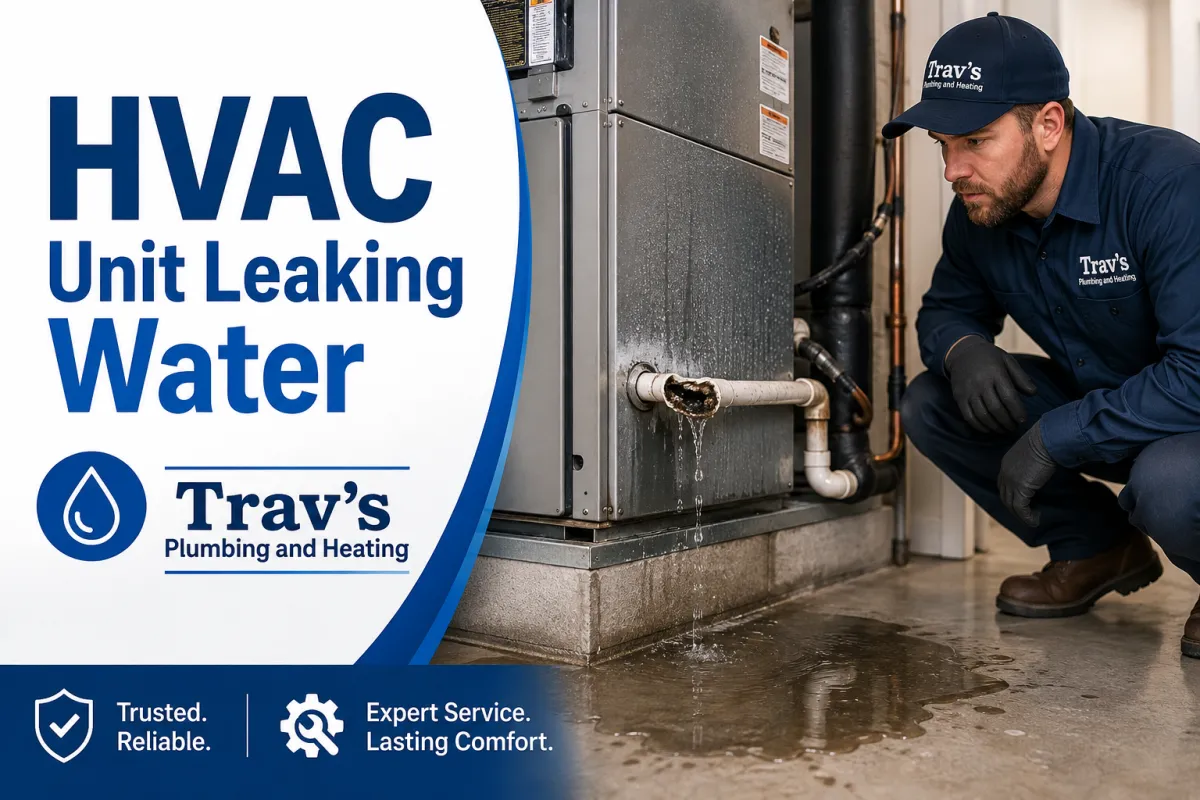
HVAC Unit Leaking Water
A leaking HVAC unit is almost always caused by a clogged condensate drain, a frozen evaporator coil, or a cracked drain pan, though in Manitoba homes it's sometimes a furnace humidifier instead.
Shut the system off, soak up any standing water, and check the simple stuff before deciding whether it's a quick DIY fix or a job for a licensed technician.
Finding a puddle under your furnace or air handler is never a good surprise.
An HVAC unit leaking water is one of the most common calls we get in Winkler and across the Pembina Valley, especially when the seasons flip and the system switches from heating to cooling.
The good news is that most causes are simple, and a few don't even come from your air conditioner.
Is a Leaking HVAC Unit an Emergency?
A leaking HVAC unit usually isn't a true emergency, but it does need attention right away.
Turn the system off at the thermostat, soak up any standing water, and check the area around the unit for damage.
Waiting a few hours to book a technician is fine.
Waiting a few days risks water damage to your floors, walls, or ceiling.
If you can't find a way to shut the system off, or the water keeps coming even after you turn it off, that's a sign the leak is more serious.
Some systems have a built in safety float switch that shuts the whole unit down the moment it senses water where it shouldn't be.
If your system won't turn on at all after you noticed the leak, that switch has likely already done its job to protect your home.
Once the system is off and the immediate mess is under control, you have time to figure out the cause before calling for repairs.
What's Causing Your HVAC Unit to Leak Water?
Most HVAC water leaks come down to one thing: something is blocking the normal path water takes out of your system.
That's usually a clogged drain line, a frozen coil that's thawing, a cracked drain pan, or a failed condensate pump.
Homes in the Pembina Valley have one more common culprit worth ruling out: a furnace mounted humidifier leaking instead of the air conditioner.
A Clogged Condensate Drain Line
As your air conditioner runs, it pulls moisture out of the air and collects it in a drain pan under the indoor coil.
That water is supposed to flow out through a small PVC pipe to the outside of your home.
Over a season of use, dust, algae, and mold can build up inside that pipe and block it completely.
Once the line is clogged, the water has nowhere to go but back up and over the edge of the pan.
A Frozen Evaporator Coil
Your indoor coil needs steady airflow to stay at the right temperature.
When something restricts that airflow, like a dirty filter or closed supply vents, the coil can get cold enough to freeze solid.
A frozen coil often shows up alongside weak cooling.
If your air conditioner isn't blowing cold air but the system is still running, ice on the coil is a common reason why.
A Cracked or Overflowing Drain Pan
Plastic drain pans get brittle with age, and metal ones can rust through.
Once a pan cracks, even a small amount of normal condensation ends up on your floor instead of in the drain.
An undersized or poorly seated pan can overflow the same way, especially during long stretches of hot, humid weather when the system is working overtime.
A Disconnected or Poorly Installed Drain Line
Condensate lines need the right pitch to let gravity do its job.
If a line was installed at the wrong angle, or gets bumped loose during other work in the attic or utility room, water will drip out wherever the disconnect happens to be instead of exiting outside.
A Failed Condensate Pump
Not every furnace or air handler can drain by gravity alone.
Units set up in a basement mechanical room, especially below the level of the nearest drain, rely on a small condensate pump to push water out and away from the system.
When that pump's float switch sticks, the motor burns out, or the discharge tube gets kinked, water backs up right where the pump sits instead of leaving the house.
It's one of the more overlooked causes, since the pump is easy to forget about until the day it stops working.
Low Refrigerant
Refrigerant that's too low causes the same kind of icing problem as blocked airflow, since the coil gets colder than it should.
Along with a leak once the ice melts, low refrigerant usually means the system is struggling to keep the house cool on hot days, not just dripping.
Refrigerant is a controlled substance in Canada, so recharging a system or repairing a leak in the line has to be done by a licensed technician.
It Might Not Be Your AC at All
Plenty of homes in Winkler and Morden run a whole home humidifier mounted right on the furnace to fight our dry winters.
These units have their own water line, float, and drain pad, completely separate from the air conditioner.
A stuck float, a cracked housing, or a clogged pad on the humidifier can leak year round, not just during cooling season.
If you notice water near the furnace in the middle of winter, the humidifier is a much more likely suspect than the AC coil.
HVAC Dripping Water vs. Central Air Leaking Water: Does the Difference Matter?
Homeowners search for this problem a lot of different ways.
Some people say their HVAC is dripping water, others say their central air is leaking water, and a few just say their furnace is leaking.
In most cases, they're all describing the same handful of causes above.
Where the water shows up does matter for figuring out what's wrong.
Water pooling around the indoor unit, in a utility room or basement, usually points to the coil, drain line, or humidifier.
Water near the outdoor condenser is often just normal condensation and nothing to worry about.
It's also worth ruling out that the water isn't coming from a completely different system.
If the puddle is closer to your hot water tank than your furnace, you're likely dealing with a water heater leaking rather than an HVAC problem, and that gets diagnosed differently.
Can You Fix an HVAC Water Leak Yourself?
You can safely handle a few of the simplest causes yourself, but coil, refrigerant, pan, and pump repairs are best left to a technician.
Trying to force a fix on those can damage the system or void your warranty.
Safe DIY steps include replacing a dirty air filter, clearing debris away from the outdoor unit, and using a wet or dry shop vacuum at the outdoor end of the condensate line to pull out a simple clog.
If the drain line has a cleanout cap near the indoor unit, a cup of plain water flushed through can sometimes clear light buildup too.
If you suspect a frozen coil, switch the thermostat fan setting to "on" instead of "auto" for a few hours.
Keeping air moving across the coil helps it thaw evenly instead of dumping a rush of meltwater into the pan at once.
If those steps don't stop the leak within a day, or you're not comfortable getting into the mechanical parts of the system, it's time to call a professional rather than guessing further.
What Happens If You Ignore a Leaking HVAC Unit?
Leaving a leak alone puts more than your flooring at risk.
Standing water near an HVAC system creates ideal conditions for mold, since drain pans and coils that don't stay dry can become a breeding ground for it.
The EPA notes that relative humidity above 60 percent is likely to cause condensation that leads to mold growth, and a leaking system pushes moisture levels in that direction fast.
There's also a real financial risk.
RBC Insurance points out that water damage now accounts for a large share of all property insurance claims across Canada.
Many policies also look closely at whether the damage came from a lack of basic maintenance, which is one more reason to deal with a leak quickly instead of letting it sit.
How to Prevent Your HVAC Unit From Leaking Again
Most leaks are preventable with a few simple habits.
Check your air filter monthly and change it as soon as it looks dirty, since a clogged filter is one of the fastest ways to freeze a coil.
ENERGY STAR recommends checking filters monthly and changing them at least every three months.
Flushing the condensate line once or twice a year keeps algae and debris from building up before they cause a clog.
Natural Resources Canada includes inspecting the condensate drain as part of a standard seasonal maintenance check for central air systems.
An annual professional tune-up, done before the cooling season starts, catches small issues like a cracked pan or low refrigerant before they turn into a puddle on your floor.
This matters even more for older equipment.
Once you know the average lifespan of a furnace and air conditioner, it's easier to tell whether a leak is a quick repair or a sign the whole system is nearing the end of its life.
Southern Manitoba's swing from dry, cold winters to hot, humid summers is hard on seals, pans, and drain lines.
Systems here work through a wider temperature range than in milder climates, which is exactly why regular maintenance matters more, not less.
How Trav's Plumbing & HVAC Can Help
We've been fixing furnaces, air conditioners, and everything in between across the Pembina Valley since 1999.
Whether the problem turns out to be a clogged drain line, a failing pan, or a humidifier that's leaking instead of your AC, our technicians handle the diagnosis and the repair in one visit whenever we can.
We serve homeowners, farms, and acreages throughout Winkler, Morden, and the wider Pembina Valley, and we're available 24/7 for the leaks that can't wait.
If you're standing over a puddle right now and not sure what's causing it, reach out to our team and we'll help you sort out whether it's a quick fix or something that needs a closer look.
FAQs: HVAC Unit Leaking Water
Why is my HVAC unit dripping water but otherwise running fine?
A slow drip while the system keeps running normally is usually a partially clogged condensate drain line rather than a frozen coil or refrigerant issue. Water is still draining, just slower than it should, which lets a small amount escape before it reaches the outlet.
Is it safe to keep running my air conditioner if it's leaking?
It's best to shut the system off until you know the cause. Continuing to run it can make a frozen coil worse, push more water past a cracked pan, and lead to more damage than if you'd stopped it early.
Why does my central air only leak water in the summer?
Central air only produces condensate when it's actively cooling, so drain line and coil related leaks almost always show up during the hottest, most humid stretches of summer when the system runs the longest.
Can a dirty air filter really cause an AC leak?
Yes. A clogged filter restricts airflow across the evaporator coil, which can drop the coil's temperature low enough to freeze. When that ice melts, it often overflows the drain pan faster than the line can handle.
How much does it cost to fix an HVAC water leak?
Cost depends entirely on the cause. Clearing a clogged drain line is usually the least expensive fix, while a cracked drain pan, a refrigerant leak, or humidifier repairs cost more depending on parts and labour. A technician can give you an accurate number after diagnosing the actual problem.
How often should I clean my condensate drain line?
Flushing the line once or twice a year, ideally before the cooling season starts, prevents most clogs before they cause a leak.
Why does my furnace need a condensate pump, and what happens if it fails?
A condensate pump is only needed when the indoor unit can't drain outside by gravity alone, which is common for basement installations. If the pump's float switch sticks or the motor burns out, water backs up right at the pump instead of leaving the house, and the pump itself usually needs to be replaced rather than repaired.
Does home insurance cover HVAC water leak damage?
Coverage varies by policy and often depends on whether the damage resulted from a sudden accident or from neglected maintenance. Check with your insurance provider directly, since policies differ on what counts as preventable damage.
